Input voltage
Record volts, hertz, and phase at the sewing floor, plus the distance from the panel to the head. Rated power on a brochure is not a substitute for the breaker and receptacle the supplier specifies.
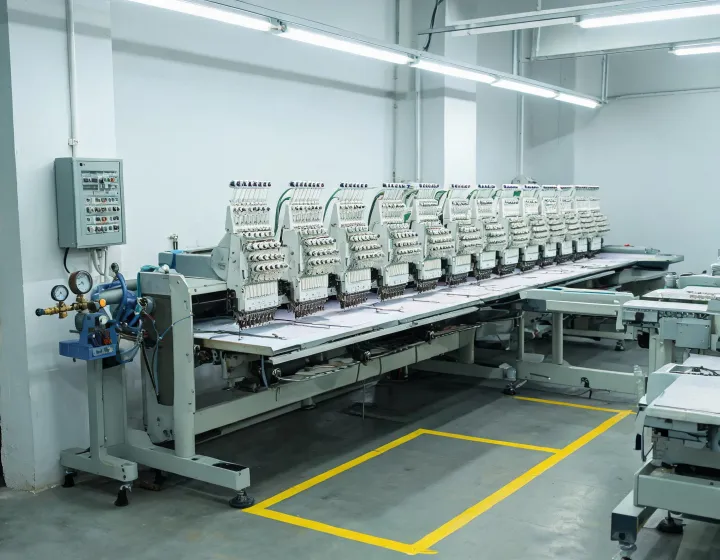
Floor and duty worksheet
A commercial embroidery machine decision starts with the room and the shift, not with a headline stitch speed. Write the application, the hours the heads will run, the power available, and the path the crate must travel. Embroidery Machine For Sale Sourcing can carry that description to factories. Fit, noise, and a safe installation remain subject to the proposed model and to the buyer review of the drawing.
Use this page when the question is where and how the equipment will run. Use the products page when the question is which hat or flat label to put on the inquiry.
Not every head needs compressed air, a network drop, or a reinforced floor. The map is a question list. Mark an item not required when the proposed manual says the machine does not use it.
Record volts, hertz, and phase at the sewing floor, plus the distance from the panel to the head. Rated power on a brochure is not a substitute for the breaker and receptacle the supplier specifies.
If trimmers or clamps use air, ask for pressure and flow in the units the manual uses, and for a regulator location. If the head is fully electric, write that the air line is not part of this brief.
Note cone-stand height and whether lint control is required for the room. A noise level limit should cite the measurement distance the buyer cares about, then ask the supplier for its own test condition.
State whether designs move by USB, by a local network, or by a single PC beside the machine. The control interface and file format are part of readiness because a head that cannot read the shop format is not ready, even if the power is correct.
Measure doorway width, elevator limits, and the working envelope plus service access on each side. A table depth that fits the room on paper can still fail if the thread rack or cap driver sticks into the aisle.
Write the expected ambient temperature and humidity if the room is not a standard sewing floor. Ask the supplier which range the proposed model was documented for, instead of assuming an office range applies.
Pieces per hour depend on stitch count, color changes, and how often an operator resets a hoop. A commercial shift of eight hours is not a duty cycle rating. Ask the supplier what continuous running means for that head, and which stitch length was used. Repeatability of a logo position should be checked against a sample the buyer provides, not against an unnamed demo design.
Standard heads reduce the document set when the cap or panel fits a listed hoop. An application-specific clamp, a taller stand, or a nonstandard voltage is a different configuration and should be priced as such. The lowest equipment price is useful only after consumables, commissioning scope, freight, and excluded frames are on both offers. That is the lifecycle comparison, and it can favor the higher machine price when the other offer omits the cap driver.
Write a measured receptacle when you have one, such as 208 V, 60 Hz, three phase, and write unknown when you do not. An air demand of 0.5 MPa belongs on the sheet only after the proposed head manual asks for air. Service clearance of 800 mm on the thread-rack side is a buyer measurement of the aisle, not a factory rating. The Thomasnet public contact-suppliers note, accessed 2026-10-26, is a workflow reference for sending that description. It does not transfer any supplier qualification onto this desk.
See inquiry labels, the head-count scope, and Quote Comparison before you send the room notes. The brief keeps the same open questions in one place.
Write the voltage as unknown and name the person who will confirm volts, hertz, and phase. Do not let a supplier assume 220 V single phase because another head in the building uses it.
State machines, heads, and whether they must share one design file. A quantity of one machine with twelve heads is not the same request as twelve single-head machines.
Add the city or the receiving dock when freight is part of the comparison. A US destination without a dock constraint is enough for a first screen, and it is not enough for a DAP crate plan.
Say the week you want the supplier to be able to discuss shipment, and ask them to count the lead time from a defined event. The desk does not publish a delivery promise.
Yes. Budget and supplier preference are optional. If you include them, name the currency and whether the amount is per machine or for the whole order.
QUALIFIED BUYER SUPPORT
Compare quotes from up to 3 factories
FREE basic specification and sourcing-requirements review
Eligible first orders may receive up to 3%
Eligibility applies to qualified business buyers and is confirmed after we review your product, quantity, destination, and sourcing requirements. Final savings depend on supplier confirmation, product type and order value.